


 Back
BackAre Turboprops Safe? Understanding Turboprop Aircraft Safety
Turboprops are a popular choice for regional private charter, offering a combination of efficiency, airport accessibility and modern comfort. But for passengers more familiar with private jets, one of the first questions surrounding the aircraft is usually: “are turboprops safe?”
In short, before we dive into more detail throughout this article, the answer is yes. Modern turboprop aircraft are designed and operated to rigorous aviation standards and are widely used for commercial, business and private aviation.
However, safety isn't determined by whether an aircraft has propellers or jet engines. Aircraft design, maintenance, pilot training, operator standards, weather conditions and flight planning all play a role.
So, what exactly is a turboprop, and when might one be the right choice for a private charter?
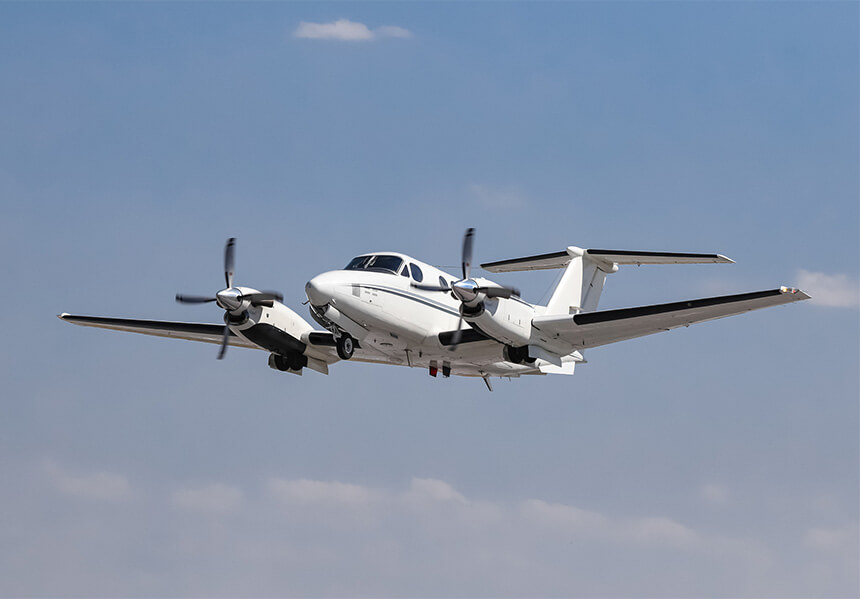
What Is a Turboprop and Why Are They Used for Private Charter?
A turboprop is an aircraft powered by a gas-turbine engine that drives a propeller. This differs from a piston-engine aircraft, where cylinders generate the power, and from a jet, which produces most of its thrust through the engine's exhaust.
Turboprops are particularly well suited to shorter and regional journeys, where their combination of efficiency and airport flexibility can make them an attractive private charter option.
One of their biggest advantages is access to smaller airports. Turboprops can operate from many regional airfields that may not be suitable for larger aircraft, potentially allowing passengers to land closer to their final destination.
The scale of this capability is significant. ATR estimates that around 34% of airports globally rely exclusively on aircraft equipped with turboprop engines. This is commercial aviation data rather than private charter data, but it demonstrates the versatility of turboprops and their role in connecting smaller and more remote destinations. For private charter passengers, that same flexibility can mean more choice of airports and less time spent travelling by road after landing.
Turboprops can also be highly efficient on shorter routes, often making them a more economical choice than chartering a jet when maximum speed isn't essential. Modern aircraft also offer comfortable cabins, quality seating and sophisticated avionics, making them a practical option for both business and leisure travel.
Are Turboprops Safe?
Yes. Modern turboprops are designed, certified and maintained according to stringent aviation requirements.
Their engines are gas turbines, a mature technology used across aviation for decades. Aircraft and engines are subject to scheduled maintenance and inspections, while professional crews receive extensive training appropriate to the aircraft they operate.
Modern turboprops can also feature advanced flight decks and safety systems. ATR's -600 series, for example, uses a modern glass cockpit with five LCD screens and flight-management technology designed to support situational awareness and crew decision-making.
What does the safety data show?
Most publicly available turboprop safety statistics relate to commercial aviation rather than private charter, so they should be used as context rather than presented as a direct safety rating for private charter.
ATR's latest analysis reports around 2.5 million flights by the worldwide commercial turboprop fleet in 2025. The ATR-600 series accounted for nearly 40% of these flights and recorded no fatal accidents during the preceding ten-year period included in the analysis.
While these figures don't represent private charter operations, they demonstrate the maturity of modern turboprop technology and the scale at which these aircraft operate.
For a private charter passenger, the more important question is whether the specific aircraft and operator meet the appropriate maintenance, training and operational standards.
How Safe Are Turboprops in Bad Weather?
Turboprops, like jets, are designed to operate in a range of weather conditions. They are not, however, expected to fly regardless of the conditions.
Pilots assess forecasts and conditions before and during every flight, considering factors such as wind, visibility, precipitation, thunderstorms and icing. Aircraft approved for operations in icing conditions are equipped with appropriate systems and procedures, while crews are trained to manage changing weather.
Turbulence can affect any aircraft, but modern aircraft are designed to withstand the loads associated with normal turbulence. Where significant turbulence or severe weather is forecast, pilots can adjust the route or altitude, or avoid the conditions altogether.
If conditions fall outside safe operating limits, the appropriate decision may be to delay, divert or cancel the flight. This is an important part of aviation safety: good operators prioritise safe decision-making over sticking rigidly to a schedule.
Are Turboprops Safer Than Private Jets?
To be transparent, there isn't a straightforward answer to this question.
Turboprops and private jets have different performance characteristics and are generally used for different types of journeys. Engine type alone isn't a meaningful measure of safety.
Instead, safety depends on the aircraft, its maintenance, the crew, the operator and the conditions in which the flight takes place.
For passengers, this means that choosing a reputable charter provider and an aircraft appropriate for the journey is more important than assuming a jet is automatically safer than a turboprop.
Turboprop vs Jet: Which Is Right for Your Journey?
The right choice will depend on what matters most for your particular trip.
A private jet will generally be faster and offer greater range, making it well suited to longer journeys or when minimising flight time is the priority. Larger jets may also provide more cabin space and additional amenities.
A turboprop can be particularly effective for shorter regional journeys. Its ability to use smaller airports can sometimes bring passengers closer to their final destination, while its efficient operation can reduce charter costs.
This means that the fastest aircraft isn't always the fastest way to complete the whole journey. A slightly slower aircraft using a more conveniently located airport can potentially save time overall.
The decision ultimately comes down to factors including:
- Distance: Turboprops are particularly suited to shorter sectors, while jets offer greater range and speed.
- Airport access: Turboprops can provide access to a wider selection of regional airports.
- Passengers: The number of people travelling will influence the aircraft and cabin size required.
- Baggage: Different aircraft have different luggage capacities.
- Travel time: Jets generally offer shorter flight times, although airport location also matters.
- Budget: Turboprops can be a cost-efficient option for shorter journeys.
Choosing the Right Aircraft for Your Private Charter
Choosing an aircraft shouldn't simply be about deciding between a turboprop and a jet. It should be about finding the aircraft that best fits the journey.
A professional charter provider like Equinox Charter will consider your departure and arrival airports, distance, passenger numbers, baggage, schedule and budget before recommending an aircraft.
For some journeys, a private jet will be the obvious choice. For others, a turboprop may offer the better combination of convenience, efficiency and value.
Overall, aircraft selection is ultimately about finding the right balance of performance, comfort, convenience and cost for each journey rather than the debate of jet versus turboprop.
Conclusion: Are Turboprops Safe?
Modern turboprops are safe, sophisticated and highly capable aircraft when operated and maintained to the appropriate standards.
Their propeller-driven engines do not make them inherently less safe than private jets. As with any form of aviation, safety relies on the aircraft, crew, maintenance, operator and operational decisions working together.
For shorter regional journeys, turboprops can also offer significant practical advantages, including access to smaller airports, efficient operation and comfortable cabins.
Ultimately, choosing a private charter aircraft should be about more than choosing a jet. It's about choosing the right aircraft for the journey.
FAQs
Are turboprops safe for private charter?
Yes. Modern turboprops are designed and operated to rigorous aviation standards. Safety depends on appropriate aircraft maintenance, qualified crews, operator procedures and responsible flight planning.
Are turboprops safer than private jets?
Neither aircraft type is inherently safer simply because of its engine. Safety depends on factors including aircraft condition, maintenance, crew training, operator standards, weather and route planning.
Can turboprops fly in bad weather?
Yes. Turboprops can operate in a range of weather conditions. Pilots continuously assess conditions and can change the route, delay the flight or divert if weather exceeds safe operating limits.
Are turboprops slower than private jets?
Generally, yes. Jets typically fly faster than turboprops, but a turboprop's ability to use smaller airports can sometimes reduce the difference in overall journey time.
Why choose a turboprop instead of a private jet?
Turboprops can be particularly well suited to shorter regional journeys, offering efficient operation and access to smaller airports. They can also be a more economical option when maximum speed isn't required.
Are turboprops comfortable?
Yes. Modern turboprops can offer comfortable cabins, premium seating, climate control and modern interiors. The exact experience depends on the aircraft type and configuration.